





You can verify a pool builder’s California license status in 10-15 minutes using the free CSLB License Lookup Tool. This beginner-level task requires no special tools—just internet access and the contractor’s name or license number. Verifying credentials before signing a contract protects you from unlicensed contractor scams, which cost California homeowners millions annually according to CSLB enforcement reports.
Pool construction is a high-dollar, high-risk home improvement category. A backyard pool project in California typically ranges from $50,000 to $150,000, making license verification one of the highest-value 15-minute tasks a homeowner can complete. Skipping this step exposes you to unfinished projects, uninsured job-site injuries, and no legal recourse if the work fails inspection.
If you’re evaluating two or three bids, complete this six-step process for each candidate before comparing prices. Price comparisons are meaningless if one bidder is operating without a valid C-53 license.
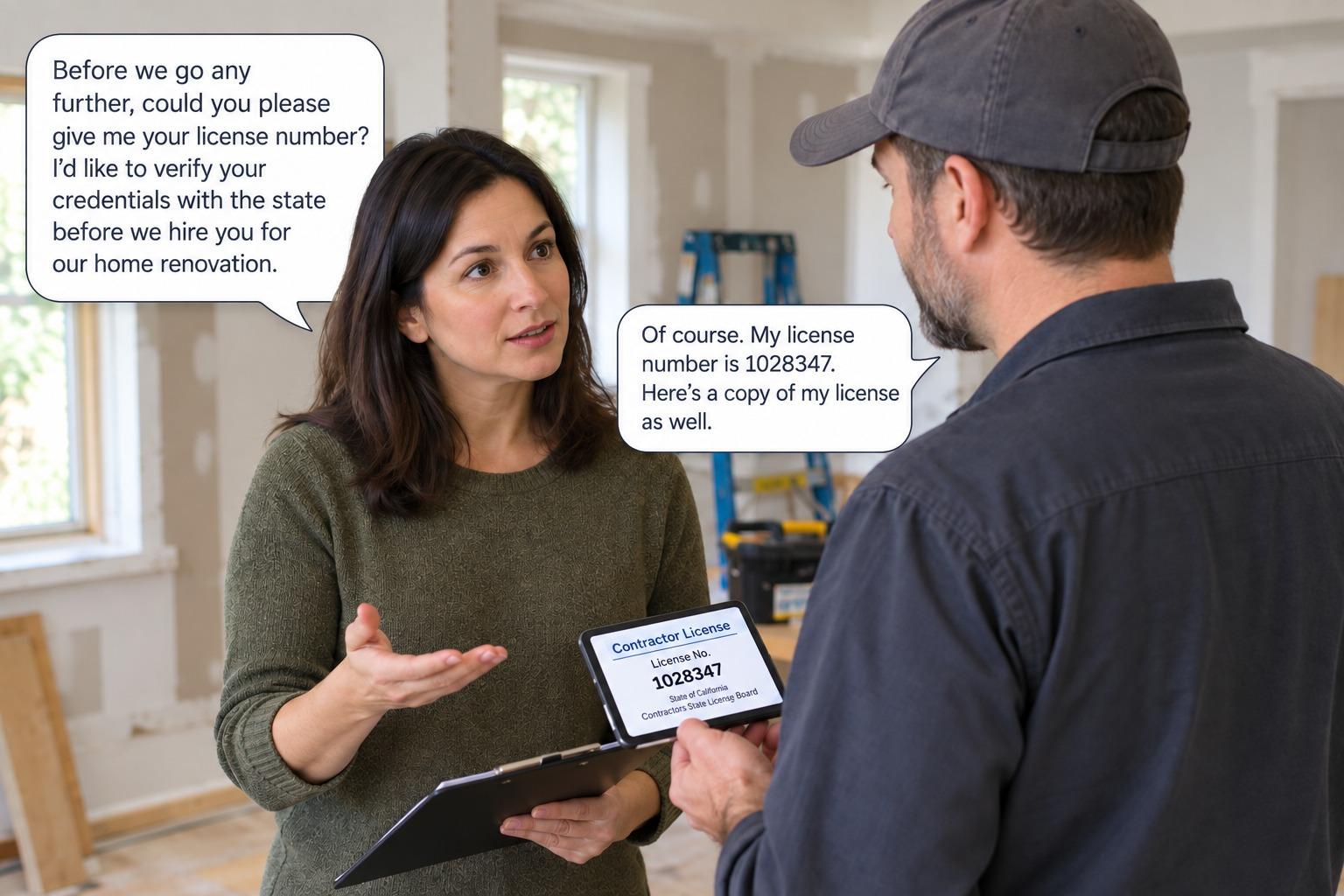
Ask every prospective pool contractor for their California Contractors State License Board (CSLB) license number before any conversation about pricing or design.
Example: If a contractor gives you the number “1234567,” confirm there are no letters or additional digits. CSLB license numbers are always seven digits with no letters.

Navigate to the CSLB’s official License Lookup Tool, the authoritative source for California contractor license search.
According to the California Department of Consumer Affairs (2025), this database updates in real time, making it the most reliable source for contractor license status check. Unlike third-party contractor directories, the CSLB tool pulls directly from the state’s regulatory system, so there is no lag between disciplinary action and public disclosure.
Verify the contractor holds a C-53 license classification, the specific designation for Swimming Pool Contractors under the California Business and Professions Code.
Unlike a General Building Contractor, a C-53 holder specializes exclusively in pool and spa construction. Hiring a B License contractor for a standalone pool project may violate contractor license classification rules and could void warranty protections if a dispute arises later.
Some contractors hold both a C-53 and a B License, which is permitted and often indicates a company capable of handling both pool construction and adjoining hardscape or structural work. If a contractor’s CSLB record lists only “B” with no “C-53,” ask directly how they are authorized to perform standalone pool construction.
California law requires pool builders to hold an active C-53 license for any project exceeding $500 in labor and materials. This is the core answer to what license does a pool builder need in California under CSLB regulations. Projects under $500 are exempt from licensing requirements, but virtually no pool project falls under this threshold given current material and labor costs.
The CSLB record displays three critical protections every legitimate pool contractor California must carry.
Request a current contractor license bond verification certificate and pool builder insurance verification document directly from the company as a secondary check. Reputable contractors will provide these within one business day; extended delays can signal lapsed coverage.
The CSLB lookup page displays bond status, insurance carrier, and expiration dates in one screen—eliminating guesswork from license status checks. If the bond section shows “No Bond on File,” this typically means the contractor cannot legally operate, and you should not proceed with hiring until the discrepancy is resolved.
Scroll to the “Complaint Disclosure” section of the CSLB record to review pool contractor complaint history.
A contractor with zero complaints after only one year in business carries less weight than one with two resolved complaints after fifteen years of operation. Context matters more than a raw complaint count.
Supplement CSLB data with an independent Better Business Bureau (BBB) search to verify pool company credentials from a consumer-review perspective.
For homeowners in Southern California seeking a fully vetted, licensed pool builder San Diego residents trust, cross-referencing local reviews with CSLB data provides the strongest confirmation of legitimacy.
| Problem | Solution |
|---|---|
| License number returns “not found” | Double-check digits; contractor may be operating illegally—do not proceed |
| License shows “expired” | Request updated contractor license renewal status before signing any contract |
| Business name doesn’t match CSLB record | Ask contractor to explain discrepancy; verify with a secondary ID document |
| Contractor holds B License, not C-53 | Confirm project scope; standalone pools require C-53 classification |
| No bond or insurance listed | Treat as licensed vs unlicensed pool contractor red flag—avoid hiring |
| Multiple unresolved complaints | Request written explanation and check dates of resolution before deciding |
| License listed under a different owner’s name | Ask whether the contractor is a subcontractor or franchisee; verify the actual signing party |
| Contractor recently changed business name | Search CSLB by license number rather than name, since numbers remain constant across rebrands |
Once you’ve completed all six steps, save a screenshot of the CSLB record and BBB profile for your records. Request copies of the contractor’s insurance certificates before signing any agreement. If you plan to compare multiple contractors, repeat this verification process for each candidate—consistency in checking protects you from swimming pool builder credentials fraud.
Finally, confirm renewal dates annually, since license status can change during multi-month construction projects. Pool builds often span three to six months from permitting to final inspection, so a license active at signing could lapse before completion. Set a calendar reminder near the contractor’s listed expiration date and re-run the CSLB search if construction extends past that point.
Search the contractor’s license number on the CSLB License Lookup Tool, confirm C-53 classification, and check bond and insurance status—all within one online record.
The official source is the California Contractors State License Board website, operated under the Department of Consumer Affairs.
Check the CSLB record for both an active C-53 license and a current $25,000 minimum contractor bond, per 2025 requirements.
No. Any contractor performing pool work over $500 without a matching CSLB record is operating illegally, and hiring them forfeits your legal and insurance protections.


