




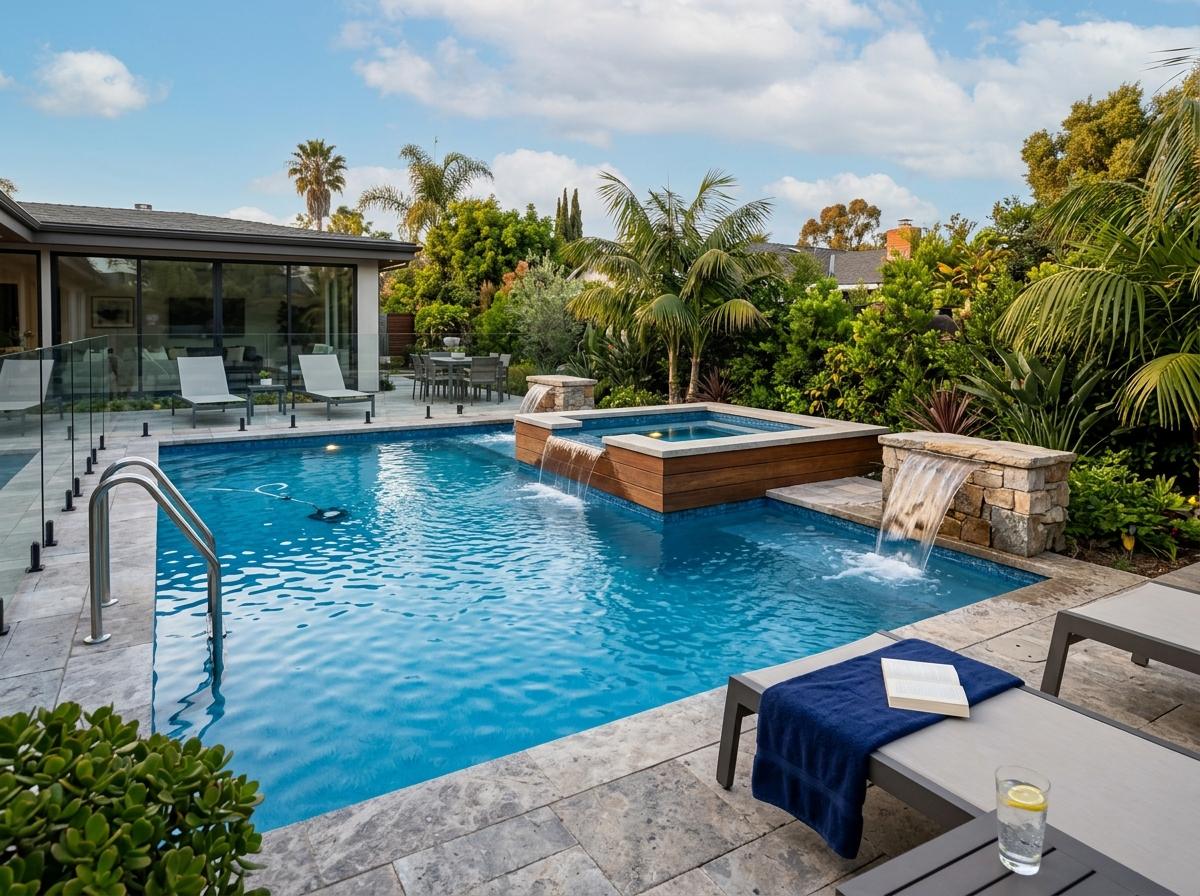
Direct answer: Energy-efficient upgrades like a variable speed pool pump, saltwater chlorinator, and pool automation system deliver the strongest pool ROI, often paying back installation costs within 2-4 years. In contrast, luxury features like waterfall features and diving boards rarely reduce operating costs but can increase home resale value and backyard enjoyment. Safety add-ons like a pool fence are non-negotiable regardless of ROI.

| Pool Add-On | Avg. Installation Cost | Annual Savings/Value | Typical Payback Period |
|---|---|---|---|
| Variable speed pool pump | $800-$1,600 | $300-$500 in energy savings | 2-3 years |
| Saltwater chlorinator | $1,200-$2,500 | $100-$150 in chemical savings | 3-5 years |
| Pool automation system | $1,500-$4,000 | 15-30% lower operating costs | 3-4 years |
| Pool cover | $200-$800 | Up to 70% evaporation reduction | 1-2 years |
| Solar pool cover | $100-$300 | Extends swim season by 4-6 weeks | Under 1 year |
| Heat pump | $2,500-$5,000 | 50% lower operating cost vs gas heater | 4-6 years |
| Robotic pool cleaner | $600-$1,500 | 45% faster cleaning, lower labor cost | 2-3 years |
| LED pool lighting | $400-$1,200 | 75% less energy than incandescent | 2-3 years |
| Pool fence/enclosure | $1,500-$6,000 | Liability protection, no direct savings | N/A |
| Waterfall/fountain feature | $1,500-$5,000 | Adds resale appeal, minimal savings | N/A |

A saltwater chlorinator converts dissolved salt into chlorine, reducing the need for manual chemical dosing. According to industry pricing data, saltwater systems cost $1,200-$2,500 installed but cut annual chemical spending by $100-$150. In contrast, a UV sanitizer system or ozone generator destroys pathogens without chlorine byproducts, appealing to sensitive-skin swimmers, but typically costs $800-$2,000 and still requires a residual sanitizer. An ionizer system uses copper/silver ions to reduce chlorine demand by up to 50%, but it doesn’t eliminate chemical maintenance entirely. This means saltwater chlorinators generally win on pool ROI, whereas UV and ozone systems win on water feel and lower chlorine odor. A properly maintained pool skimmer remains essential regardless of sanitizer choice to keep debris from overwhelming any system.
A pool automation system paired with a smart pool controller lets owners manage pumps, heaters, and lighting remotely via smartphone. Data from pool automation manufacturers shows automated scheduling can lower operating costs by 15-30% by preventing overuse of pumps and heaters. Manual systems, in contrast, rely on owners remembering to adjust runtimes, which often leads to energy waste. A pool alarm can also integrate into automation platforms, adding a safety layer that manual systems lack. For families researching how much pool automation actually saves, the answer is measurable: reduced pump runtime alone can cut electricity use by 20% annually.
A variable speed pool pump costs $300-$600 more upfront than a single-speed model but uses up to 90% less energy at lower flow settings. Single-speed pumps run at one output level regardless of need, wasting energy during off-peak circulation. Because pumps account for roughly 60% of a pool’s total energy use, this single upgrade often produces the fastest pool ROI on this list—typically 2-3 years.
A traditional gas pool heater heats water quickly but costs more to run, whereas a heat pump uses ambient air and electricity for roughly 50% lower operating costs. Heat pumps cost more upfront ($2,500-$5,000 vs $1,500-$3,500 for gas) but last 10-15 years compared to a gas heater’s 5-10 year lifespan. For climates with mild winters, heat pumps generally deliver better long-term value; gas heaters make more sense for occasional or cold-climate heating needs.
A robotic pool cleaner operates independently of the pool’s filtration system, cleaning floors and walls up to 45% faster than suction-based automatic pool cleaners. Automatic cleaners, which attach to the skimmer line, cost less ($200-$600) but add wear to the pump and filter. Robotic units cost more ($600-$1,500) but use their own low-voltage motor, reducing strain on the primary pump. For pool maintenance savings and equipment lifespan, robotic cleaners are the stronger long-term investment.
A standard pool cover reduces evaporation by up to 70%, cutting water and chemical replacement costs. A solar pool cover does the same while also absorbing sunlight to raise water temperature by 5-10°F, extending the swim season by 4-6 weeks. Solar covers cost less ($100-$300) but degrade faster, needing replacement every 2-3 years, whereas standard covers last 5-10 years.
LED pool lighting and fiber optic lighting both offer energy-efficient ambiance, using 75% less power than incandescent bulbs, but fiber optic systems cost more due to remote light-source installation. A waterfall feature, pool fountain, pool slide, diving board, pool deck jets, and spa attachment enhance backyard enjoyment and can support home resale value, but they rarely reduce operating costs. Homeowners researching best pool add-ons for the money should treat these as lifestyle investments rather than cost-saving upgrades. For a full breakdown of pool features worth the cost, comparing installation pricing against long-term enjoyment helps clarify which luxury upgrades fit a given budget.


