




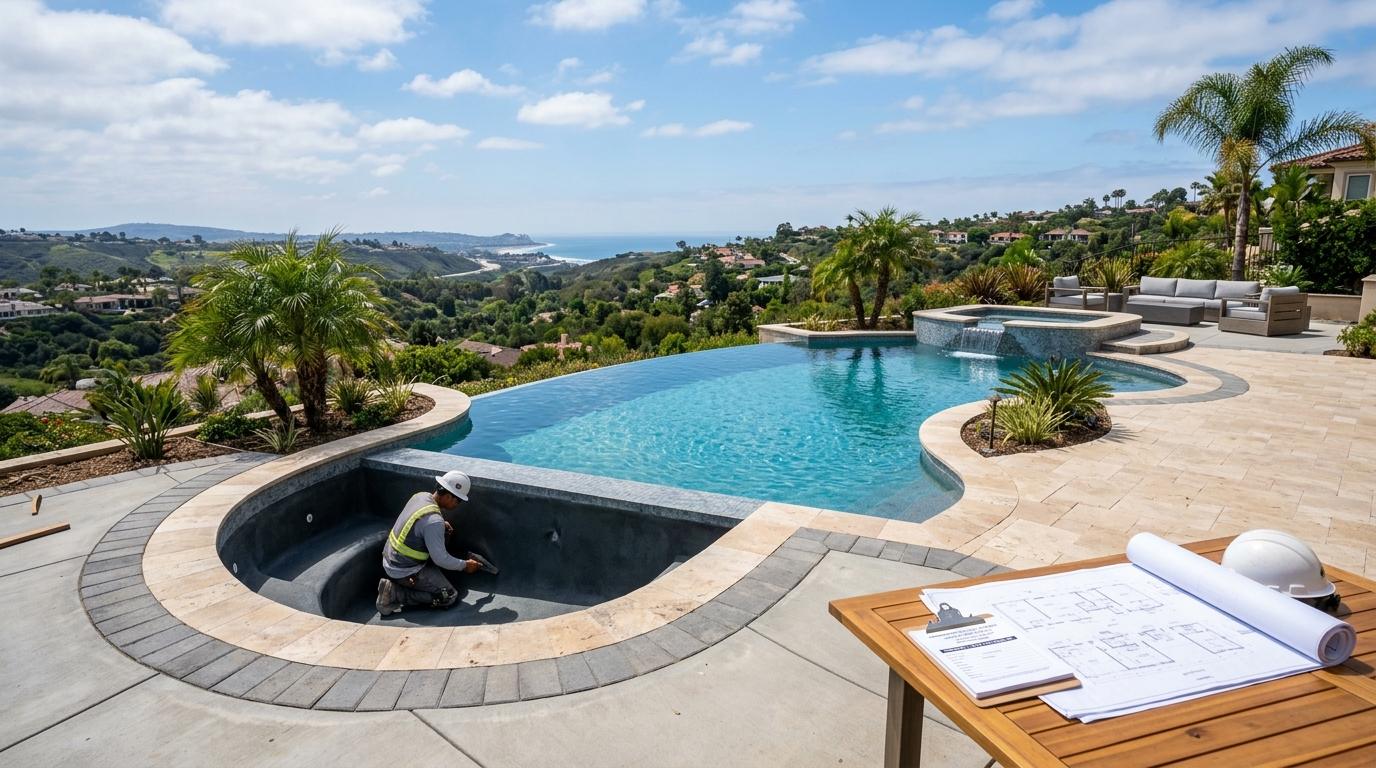
Yes, a pool permit is legally required and worth obtaining if you’re building an inground pool, spa, or most above-ground pools in San Diego County. Under the California Building Code and San Diego County Code, any permanent swimming pool structure requires a building permit, along with related electrical permit, plumbing permit, and often a grading permit. The only common exception is a temporary above-ground pool holding less than 18 inches of water with no permanent plumbing or electrical connections.
A pool permit isn’t just paperwork—it’s a compliance package that protects your investment and your family.
Homeowners in unincorporated San Diego County follow a distinct permit process for building a pool in unincorporated San Diego County, which routes through the county rather than a city development services office. This is a key difference between city and county pool permit requirements that many first-time pool owners overlook.

As of 2025, permit costs vary based on pool size, location, and scope of work.
| Item | Estimated Cost (2025) |
|---|---|
| Building permit fee | $400–$1,200 |
| Plan check fee | $300–$900 |
| Electrical permit | $100–$300 |
| Plumbing permit | $100–$300 |
| Grading permit (if required) | $500–$2,500 |
| Coastal Development Permit (coastal zone only) | $1,000–$5,000+ |
| Total typical permit package | $1,500–$4,000 |
Beyond permit fees, total pool construction permit costs are folded into overall project budgets, which range from $50,000 to $150,000 for a standard inground pool in San Diego County, according to 2024–2025 industry estimates. A licensed pool contractor typically includes permit acquisition in their contract, streamlining the permit application for pool installation.
Standard residential pool plan checks take 4–8 weeks in unincorporated San Diego County and 3–6 weeks within City of San Diego jurisdiction, as of 2025. Coastal zone properties requiring a Coastal Development Permit can add 60–90 days to the timeline.
Pulling a permit delivers measurable returns beyond legal compliance.
Permitted pools must comply with the Swimming Pool Safety Act, the federal Virginia Graeme Baker Pool and Spa Safety Act, and California’s pool barrier law. These mandates require anti-entrapment drain covers, approved pool fence requirements California standards (minimum 60-inch fence height in most jurisdictions), and self-latching gates—directly reducing child drowning risk.
According to county enforcement data patterns typical across California jurisdictions, retroactive permitting after construction—sometimes called “after-the-fact” permits—can cost 2–4 times the original permit fee, plus potential fines. This answers a common concern: what happens if you build a pool without a permit is rarely a minor issue.
Even exempt structures should still verify pool safety code compliance and check local zoning ordinance rules and setback requirements, since some HOAs impose stricter standards than the county.
San Diego County pool setback and zoning rules generally require pools to sit at least 5 feet from side and rear property lines, though exact property line pool distance requirements vary by zoning designation. Always confirm current pool setback distance requirements with your local jurisdiction before finalizing pool design, and obtain HOA pool approval if applicable, since HOA covenants can impose tighter restrictions than county code.
If a full in-ground pool permit process feels daunting, consider these alternatives:
Because permit navigation can be complex, many homeowners rely on an experienced pool contractor San Diego team to handle everything from plan check to final inspection. For homeowners exploring this route, understanding pool permit San Diego County requirements upfront with a licensed general contractor license holder simplifies the entire backyard renovation permits process.
The County of San Diego Department of Planning & Development Services offers an online portal for submitting building permit applications, uploading engineered pool plans, and scheduling inspections. Steps to obtain a swimming pool permit in San Diego generally include: submit site plan, pass plan check, pay fees, schedule grading/electrical/plumbing inspections, and receive final sign-off from a San Diego Building Inspector.
Yes—getting a pool permit is worth it for virtually every San Diego County homeowner building a permanent pool or spa. The permit ensures compliance with pool building codes San Diego residents are legally bound to follow, protects resale value, satisfies insurance requirements, and—most importantly—enforces life-saving safety standards under Title 24 Energy Standards and the Virginia Graeme Baker Act. The modest cost ($1,500–$4,000) and 4–8 week timeline are minor compared to the legal and safety risks of skipping the process. Can I build a pool without a permit in California? Technically only for small exempt above-ground pools—everything else requires full compliance.


