




Whether shotcrete or gunite is the best option for your pool tends to depend on the soil in your backyard. Shotcrete tends to be more reliable and straightforward for standard yards, but gunite provides flexibility that can work well with certain soil types. As experienced pool builders San Diego homeowners trust, the team at San Diego Pools know choosing the right material starts with understanding your soil. Here are some things you’ll need to consider before settling on a material.
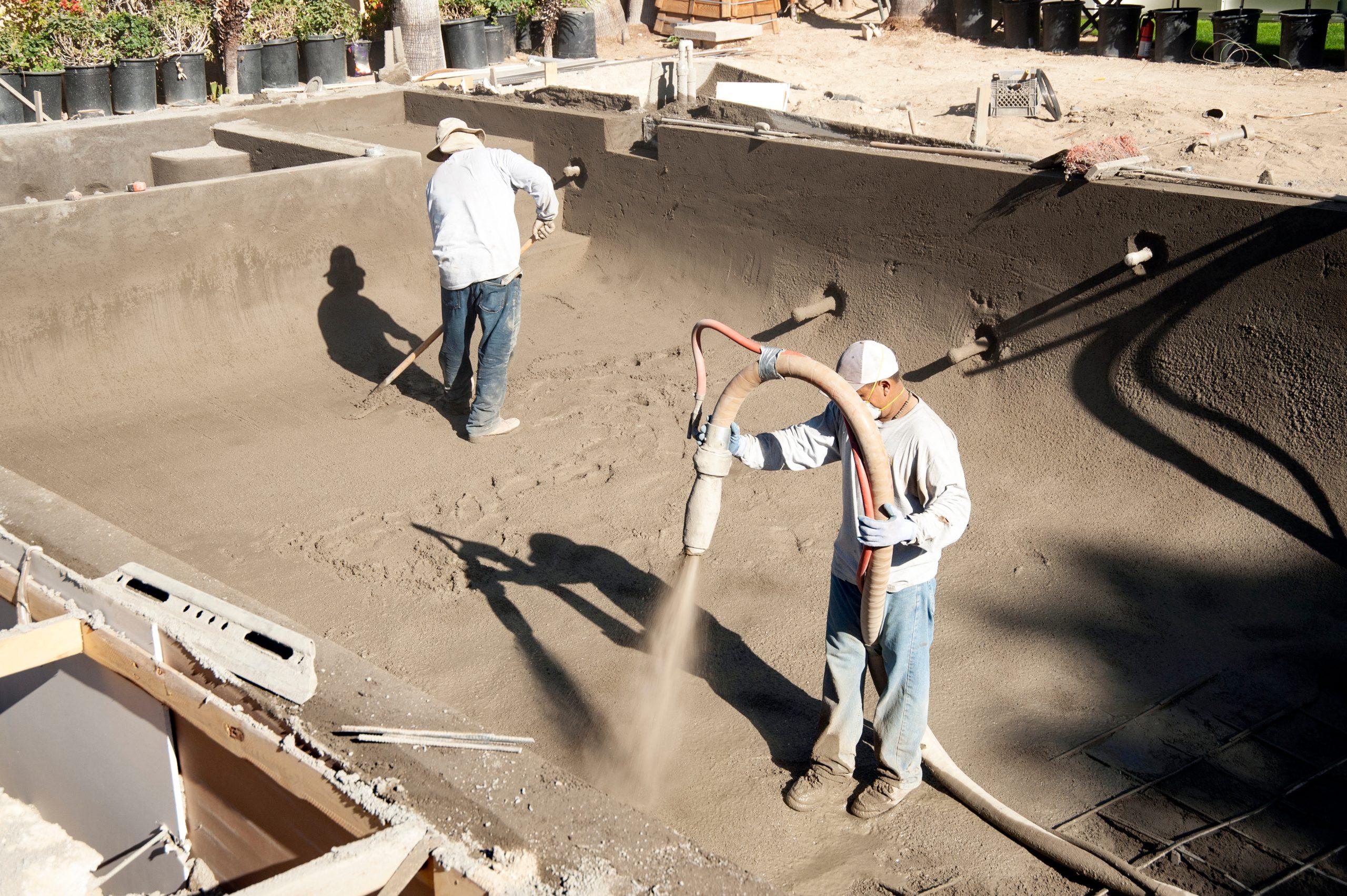
To find the right type of concrete for your pool, it’s important to understand how both options work. Shotcrete refers to wet premixed concrete that’s sprayed onto your pool surface in one layer. Meanwhile, gunite consists of a dry concrete mix that’s sprayed onto the pool wall alongside a mist of water, and it mixes together to form wet concrete during the application process.
If you have a type of highly compacted soil that could benefit from extra-strong concrete, you might want to choose shotcrete. Shotcrete has a higher compressive strength rating than gunite. However, keep in mind shotcrete is more prone to cracking than gunite, so improperly applied shotcrete can be very weak, especially in areas with unstable ground.
Check out the quality of our smooth concrete work as our experienced team gets it done:
View this post on Instagram
If your soil is unusually wet or dry, gunite is often the preferred choice. The benefit of gunite is that your pool installer controls the moisture level. Instead of having to rely on premixed shotcrete from a factory far away, they can customize your gunite to work with your soil’s moisture levels.
Here’s what Marcio D. from San Diego had to say about his experience with our team:
“They really know what they are doing, and the final product is very solid. SD Pools was able to finish a beautiful pool, the envy of the neighborhood! :-)”
If you have soil with sand or other aggregates that cause shifting, you’ll typically need extra reinforcement. Gunite and shotcrete both work well with rebar, but shotcrete is slightly more prone to slumping when applied on uneven or shifting surfaces. Gunite allows for a slower installation with multiple coats, so it also allows pool installers to more easily correct issues due to shifting.
Are you ready to build the pool of your dreams? At San Diego Pools, we’re proud to be one of the most trusted pool companies San Diego homeowners rely on for expert guidance and quality construction. Whether your yard calls for the strength of shotcrete or the flexibility of gunite, we’ll guide you through every step of the process to ensure a flawless, long-lasting installation. Don’t leave your pool build to chance. Contact San Diego Pools today for a free consultation
There’s no definitive answer to this question. Many people find gunite offers more pros than shotcrete does, but shotcrete performs very well in certain situations.
Most bonds can be approved and issued within 24 to 48 hours, depending on the type and value of the bond.
Shotcrete is a little easier to apply if the installer is inexperienced. However, even if it’s not as fast, gunite is easier for pools with custom shapes and more complex designs.
Prices for shotcrete and gunite are somewhat similar. However, shotcrete can be more expensive because you have to quickly pour it before the premixed material hardens.
Some research suggests gunite lasts longer, but durability is mostly down to application. An experienced crew can get similar results regardless of what material they use.


